
Organic search is rarely as simple as “rank higher, get more clicks” anymore.
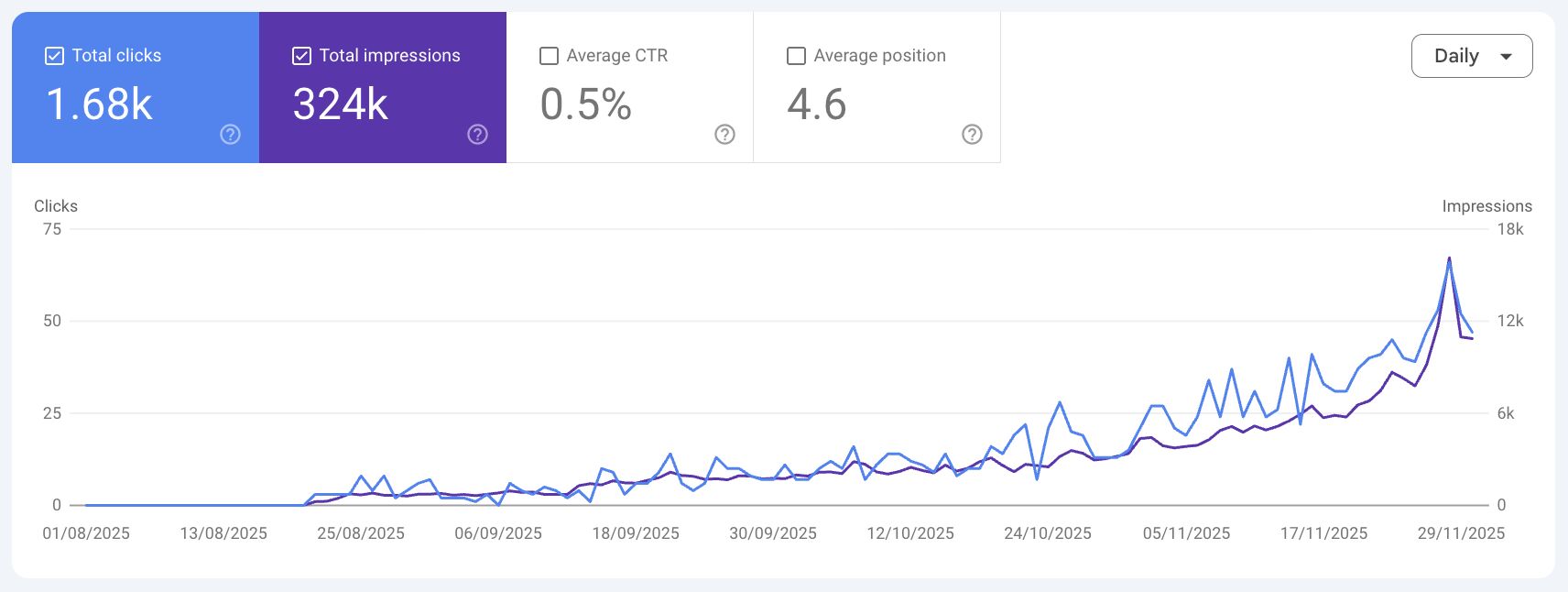
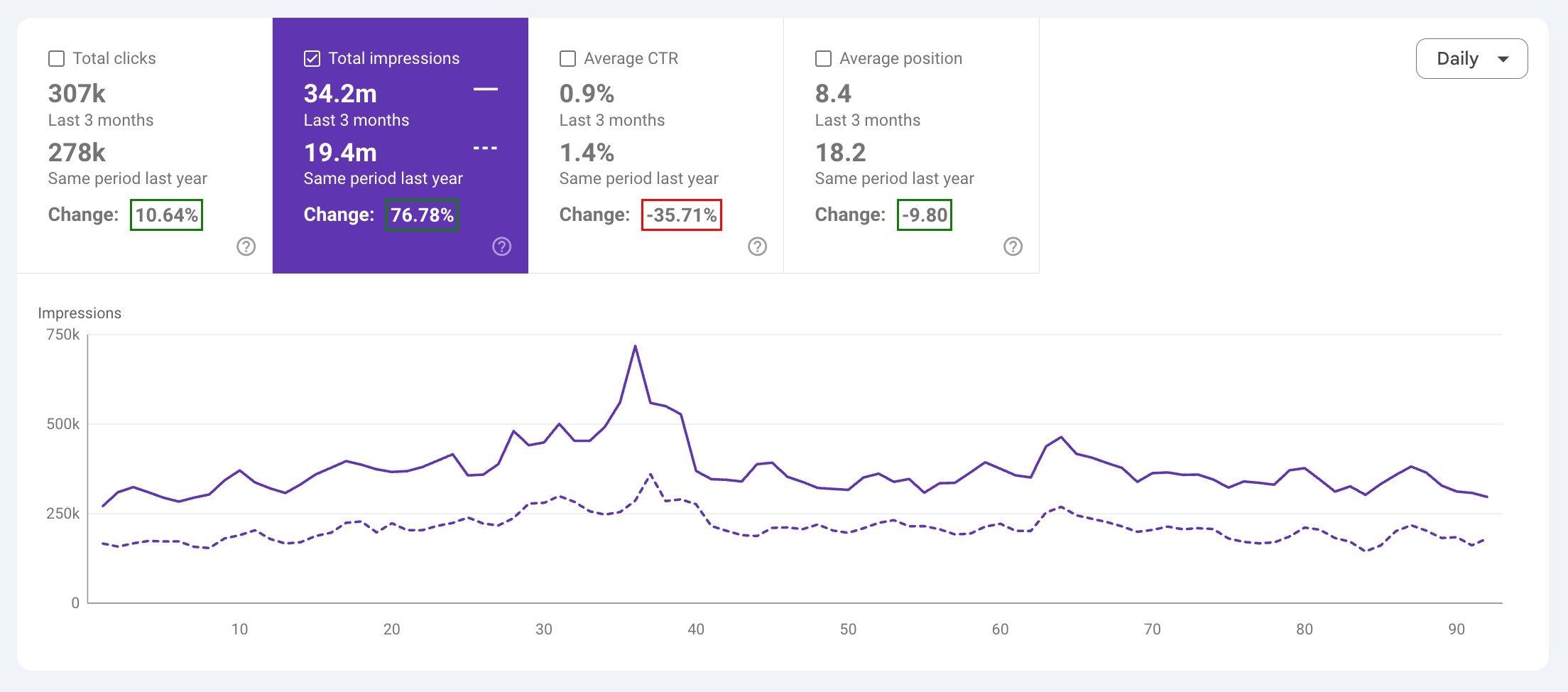
I saw that clearly in a recent year-on-year comparison where a brand grew organic search impressions by 76.8%, increased clicks, and improved average ranking position significantly. At the same time, average click-through rate fell.
On the surface, that combination can look contradictory. Stronger visibility should mean stronger click-through, at least in the cleaner version of SEO reporting many people still expect. But search does not work that neatly now.
This case study looks at what happened, how I approached the opportunity, and why the impact of the work was stronger than the CTR line alone might suggest. It is also a useful example of how SEO performance needs to be interpreted when AI overviews, paid ads, shopping units and richer SERP features are changing what users see before they reach an organic result.
The performance at a glance
Across the most recent three-month period compared with the same period the year before, the brand achieved:
- A 76.8% increase in organic search impressions, growing from 19.4 million to 34.2 million
- A 10.6% increase in clicks, rising from 278,000 to 307,000
- A clear improvement in average position, moving from 18.2 to 8.4
- A decline in average CTR, from 1.4% to 0.9%
The strongest part of this result is not just the impression growth. It is the combination of signals.
The brand was appearing more often, across a wider set of relevant searches, in stronger average positions, and with more clicks than the year before. That matters because impressions alone can be misleading. A site can grow impressions by appearing for queries that do not really matter. In this case, the ranking and click improvements gave the visibility growth more weight.
At a glance, some people would focus on the CTR decline. I think that would be the wrong starting point.
CTR is still useful, but it needs context. Without that context, it can make strong SEO performance look weaker than it is.
Why CTR fell while SEO performance improved
Click-through rate has become a much blunter metric than it used to be.
When AI overviews appear above traditional organic listings, they can answer part of the user’s query before a searcher clicks. When PPC and shopping ads dominate commercial results, organic listings may sit lower on the page even when rankings have improved. When content starts appearing for broader informational searches, impressions can grow faster than clicks.
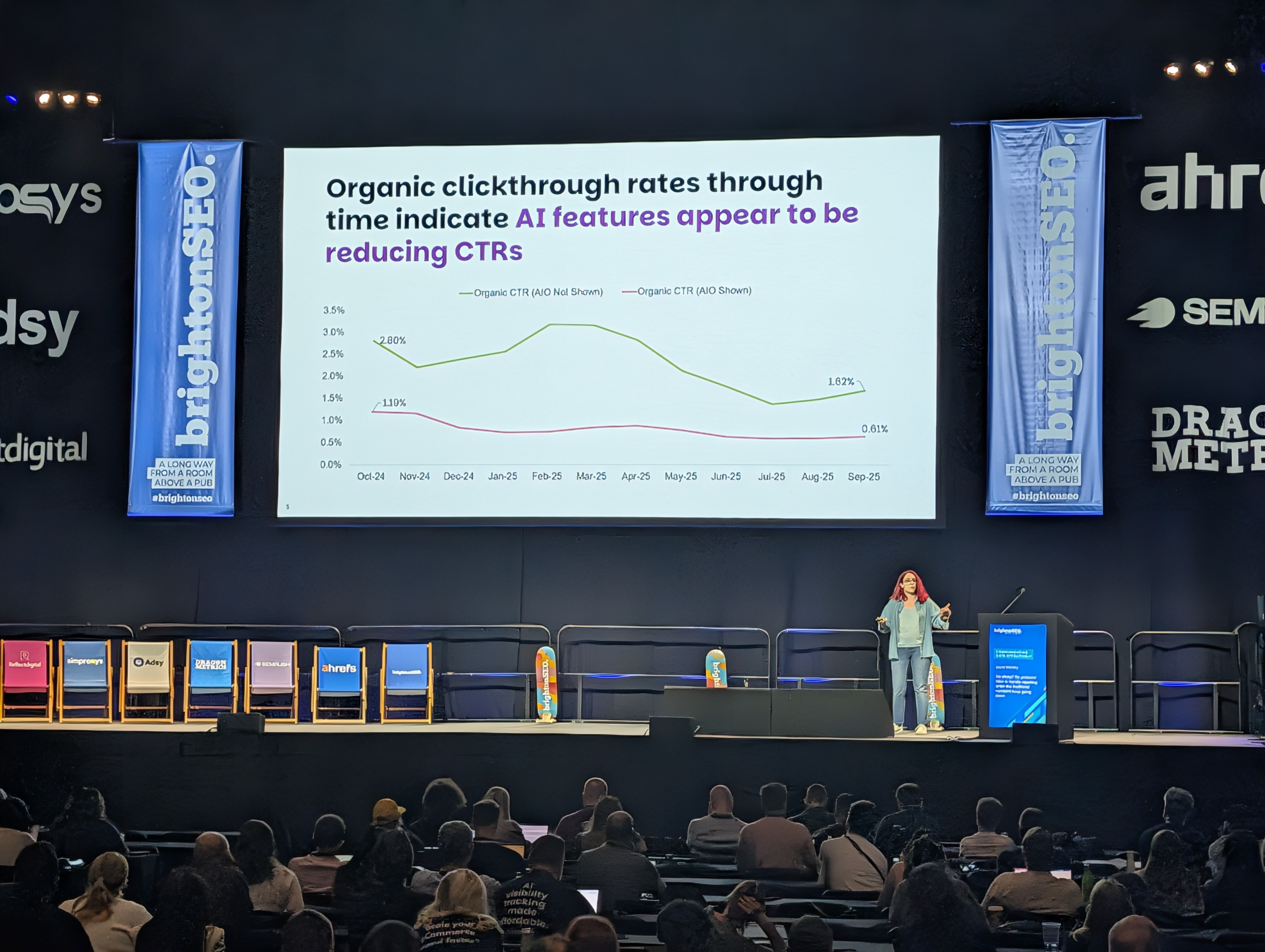
The CTR decline was not, on its own, evidence of weaker SEO performance. It reflected a more crowded results page and broader visibility across the search journey.
The important point is that clicks still increased. Rankings also improved. The brand was not only being seen more often. It was receiving more organic traffic and appearing in stronger positions while competing in a harder search environment.
That is why I would never judge this result by CTR alone.
A more useful question is: did the work increase relevant visibility, improve competitiveness, and create more opportunities for organic traffic?
In this case, the answer was yes.
How I approached the opportunity
The work behind this growth was not about chasing every possible keyword or producing content for the sake of activity.
My focus was on finding where the brand had a credible opportunity to earn more visibility, then making the site clearer, stronger and more competitive in those areas.
That meant looking at three things together:
- Where the brand already had topical relevance but was underperforming
- Where search demand was growing or becoming more visible through AI-led results
- Where existing pages could be improved before creating anything new
That last point is important. SEO growth does not always come from adding more pages. In many cases, the biggest gains come from improving what already exists, clarifying structure, aligning content more closely with intent, and strengthening internal relationships between pages.
The aim was not volume. It was better coverage, better relevance and better interpretation of how the search results were changing.
Expanding visibility without chasing irrelevant traffic
One of the main drivers of the 76.8% impression growth was broader organic coverage.
That does not mean the strategy was to pursue every marginal keyword. I am wary of that approach because it can inflate impressions without improving meaningful visibility.
Instead, I focused on areas where the brand had a legitimate reason to appear and where the existing content footprint did not fully reflect the demand in search.
That involved identifying gaps around relevant themes, improving content that was not answering the full intent of the search, and making sure supporting pages helped reinforce the broader topic.
This mattered because search engines increasingly need clear signals about topical depth and usefulness. Users need that too. A page might rank, but if it only answers part of the need, it leaves room for competitors to take the better position.
The visibility growth came from making the site more eligible and more competitive across searches that were already connected to what the brand could credibly speak about.
The result was not just more impressions. It was more visibility in the right places.
Strengthening rankings that were already within reach
Alongside broader coverage, I also prioritised pages that already had some traction.
These are often some of the most valuable SEO opportunities. A page ranking just outside the strongest positions is already being considered by Google. It usually does not need a complete rethink. It needs sharper alignment.
The work included reviewing search intent, improving page structure, updating content where it had fallen behind, and strengthening internal links so that important pages were better supported.
The improvement in average position, from 18.2 to 8.4, reflects that kind of work.
That shift is not cosmetic. Moving from page two territory into top ten territory changes how often a brand is seen and how often it has a realistic chance of earning the click.
It also changes how the rest of the data should be read. If impressions had increased while average position worsened, I would be much more cautious about calling the result strong. But impressions increased while average position improved significantly. That makes the growth more meaningful.
What AI overviews changed in the reporting
AI overviews made the reporting more complicated, but not less valuable.
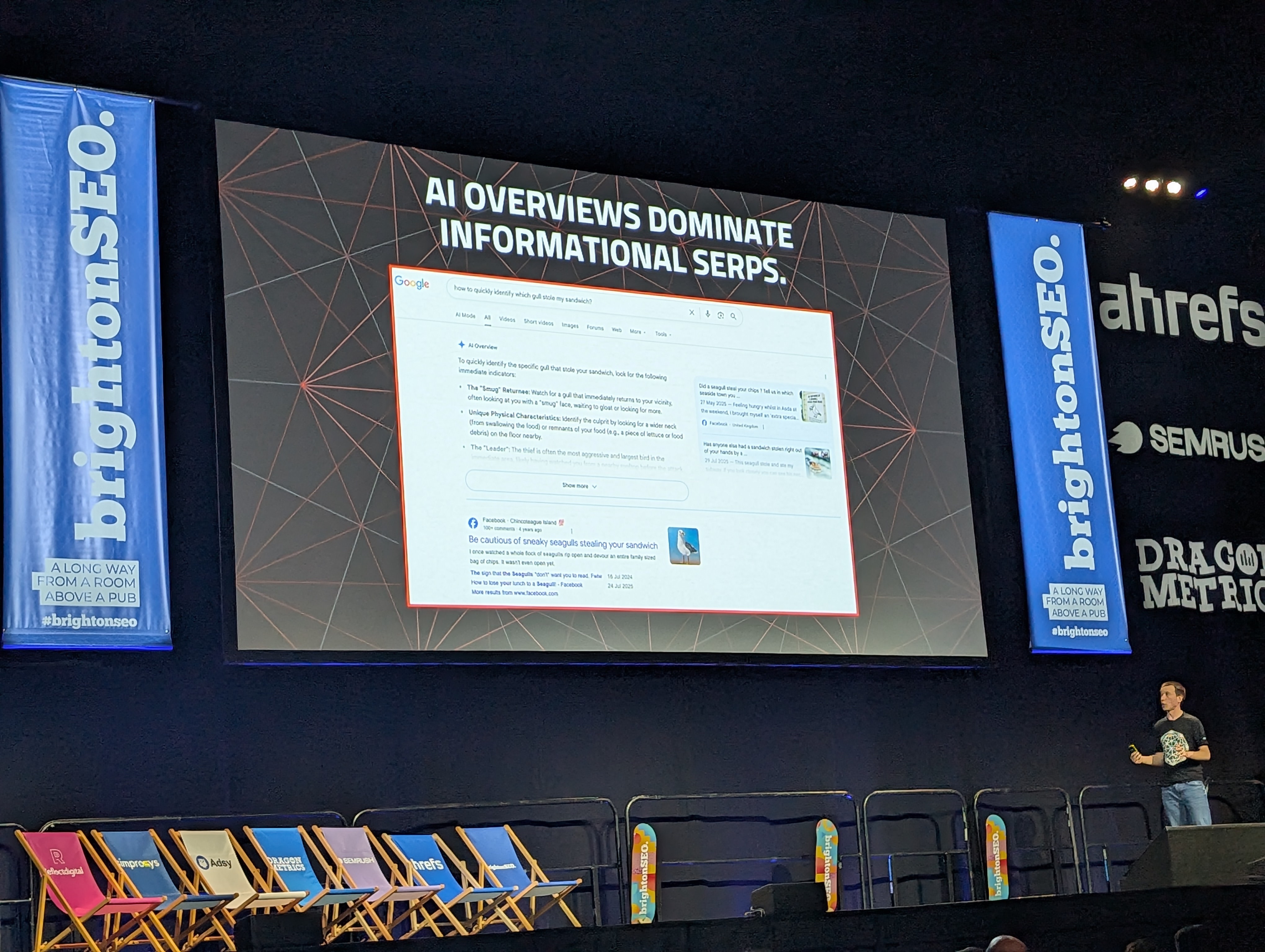
For some informational queries, AI-generated summaries can reduce the need for an immediate click. That can put pressure on CTR, particularly when the site is gaining visibility earlier in the research journey.
But AI-led visibility can still matter. Being surfaced around these results can introduce the brand earlier, support familiarity, and influence later searches where the user is closer to taking action.
This is why I do not think AI overviews should be discussed as a separate trend bolted onto SEO reporting. They are now part of how the results page behaves. They change the relationship between impressions, clicks and brand exposure.
In this case, some of the visibility growth sat in precisely that messy middle ground. The brand was being seen more often, including around searches where the click is no longer the only useful outcome.
That does not mean clicks stop mattering. They absolutely do. But it does mean the value of SEO cannot always be judged by immediate CTR alone.
How I interpret this kind of SEO performance
The simplest reading of this case study is this: the brand became more visible, more competitive and more present across relevant search demand, while the SERP became less generous with clicks.
That is not a contradiction. It is a pattern I expect to see more often.
The stronger rankings suggest that the site became more competitive. The higher impressions suggest it appeared across a wider and more visible set of searches. The increase in clicks shows that this was not visibility without traffic benefit. The lower CTR shows that impressions were converting into clicks less efficiently than before.
The mistake would be to force all of that into a single good-or-bad judgement.
I would present this as a positive performance trend with an important caveat: SEO visibility and traffic improved year-on-year, but the search results page became more crowded and less click-efficient.
That is a more honest reading than ignoring the CTR decline. It is also more accurate than treating the CTR decline as evidence that the work underperformed.
Practical takeaways from the case study
There are a few useful lessons I would take from this performance pattern.
-
Do not judge CTR without looking at the SERP A falling CTR can be a warning sign, but it can also reflect AI overviews, paid ads, broader query coverage or more informational visibility. The search results page needs to be part of the analysis.
-
Separate visibility growth from traffic growth Impressions and clicks are connected, but they do not move at the same pace. Visibility can grow faster than traffic when a brand reaches earlier-stage searches or when SERP features absorb more attention.
-
Check whether impression growth is relevant More impressions only matter if they come from searches connected to the brand’s audience, products, services or expertise. Query quality matters as much as query volume.
-
Use average position as supporting evidence Average position is not perfect, but a shift from 18.2 to 8.4 is meaningful when clicks and impressions also increase. It helps show that visibility growth was supported by stronger competitiveness.
-
Prioritise pages already close to stronger performance Some of the best SEO gains come from improving pages that already rank but are not yet doing enough. Better structure, clearer intent alignment and stronger internal links can make a significant difference.
-
Explain the trade-off clearly In this case, I would not hide the CTR decline. I would explain it plainly: visibility improved, clicks increased, rankings strengthened, but the SERP became more competitive and impressions converted less efficiently.
-
Look beyond the first click If visibility grows across earlier-stage searches, it is worth checking branded search, returning users, assisted conversions and later-stage organic sessions. Some of the impact may show up further down the journey.
These are simple points, but they help turn a potentially confusing report into a clear performance story.
Final perspective
This case study matters because it shows how easy it is to misread modern SEO performance.
A 76.8% increase in organic search impressions is a strong result. So is a 10.6% increase in clicks. So is an average position improvement from 18.2 to 8.4.
The CTR decline does not erase that progress. It explains the environment the progress happened in.
That is the part I think more SEO reporting needs to get right. The job is not to make the data look cleaner than it is. It is to understand what the data is really saying, explain the trade-offs honestly, and make better decisions from there.
That is where strong SEO work has to sit now: not only in creating growth, but in understanding whether that growth is meaningful, resilient and commercially useful when the search landscape keeps shifting around it.